A debut:
Together with you, in person and through this newsletter, we have followed Stefania and her work from Italy to Seoul, by way of Potsdam, Hamburg and Paris, always alongside Orbita Spellbound. Now Madeleine has a preview at Fonderie Limone on Saturday 10 and Sunday 11 October, followed by a residency in Bassano from the 14th to the 24th for the final fine-tuning; then, on Wednesday 28 October, it opens at Teatro Grande in Brescia.
You can find the teaser on Vimeo.
Out and about:
Saturday 10 and Sunday 11, Rhu is with Teatro della Valdoca at Teatro Petrella in Longiano.
Saturday 17 and Sunday 18 October, Aurelio leads a workshop in Milan.
Monica, Zoe and Ida, Saturday 24 and Sunday 25, hold training for spectres at Forte Marghera, with Live Arts Cultures.
Friday 30 and Saturday 31 October, you’ll find us with redrum in Bologna at Gender Bender, in the cellars of Palazzo Bentivoglio. There will even be a beautiful bar.
Photos, music, videos, reading and social media:
There’s a new EP by OvO hot off the press.
From Hangartfest and Villa Imperiale, there’s a lovely video made by Culto, an evocative record of what took place; in Artuu Magazine you’ll find Cecilia Casadei’s account and on Hypercritic Antonio Cioffi and Paolo Paggi look back on the festival, with a special memory of goldroom. There are Daniele Casadio’s photos and Lorenzo’s for Specie di spazi at Manualetto with Armonika. By many accounts, Berlin in 1997.
There are Laura’s photos for Camera 2046.
There are Daniele Carnevale’s photos at Villa i Tigli for perAspera.
There’s the first music video from the goldroom soundtrack.
On ATeatro, a look at Sport, seen at Fisiko!
If you’re seeing less of us on Facebook, it’s because the platform now lets pages post no more than two external links a month, unless they pay. We need to work out what to do there, as we did with Instagram. It needs a plan. We’re thinking about it. Worst case, we’ll write to you a little more often, if you’d like that.
Musiche di coda:
The music column that closes our newsletter is in the hands of Francesca Morello aka R.Y.F., Stefania Pedretti aka Alos and Bruno Dorella.
B.D.: They were Pussy Galore in the 90s, then Royal Trux in the 2000s, and today they’re Black Bananas. They’ve swallowed unimaginable quantities of drugs, success never even came close, they must be 135 years old. But they’ve always made free music, following a vision of their own, out of time yet always on point. Murky, sensual and toxic, even at 135.
R.Y.F.: I wanted to be romantic, but then I changed my mind, or maybe not.
Alos?: I chose this track by an artist I really admire. I was recently in Bomarzo, in the wonderful Parco dei Mostri, the Park of Monsters, and I find that the music she composed, inspired by that place, is truly in tune with the landscape: as you walk, you come upon these giant sculptures, “frightening” in their day.
You can find the first volume of Musiche di coda on Apple Music and on Spotify, and you can listen to the second on Apple Music and on Spotify too.
An appendix. We need to talk about money.
In the live performance sector, the renewal of the national collective agreement for workers is under discussion. For those of you who didn’t know, the minimum wage for a dancer in Italy is currently around €72 gross per day. In France it is about €163, in neighbouring Austria €136.
Simply recovering the purchasing power that has been lost would bring the minimum to about €88. We ought to reach at least €100 gross to guarantee people a dignified wage.
But the European cultural system relies on public funding and, in Italy above all, that funding is not growing.
Italy ranks third from bottom for investment in culture in the European Union. Despite being in the G7.
If the agreements changed today, with public resources unchanged, many jobs would be lost, in the performing arts and across the whole cultural sector, which has been struggling for some time. The highest price would be paid by small and medium-sized organisations like ours, those working in research, with no room in their budgets to find the missing resources.
This adjustment is an absolute necessity and must be supported by the whole system. We companies, unions, workers and artists are on the same side: dignified wages and adequate public resources are two sides of the same demand. Each of us sits somewhere: at a negotiating table, in an association, at a meeting with institutions. That is where this awareness can become shared action. Culture is a right for the whole of society.
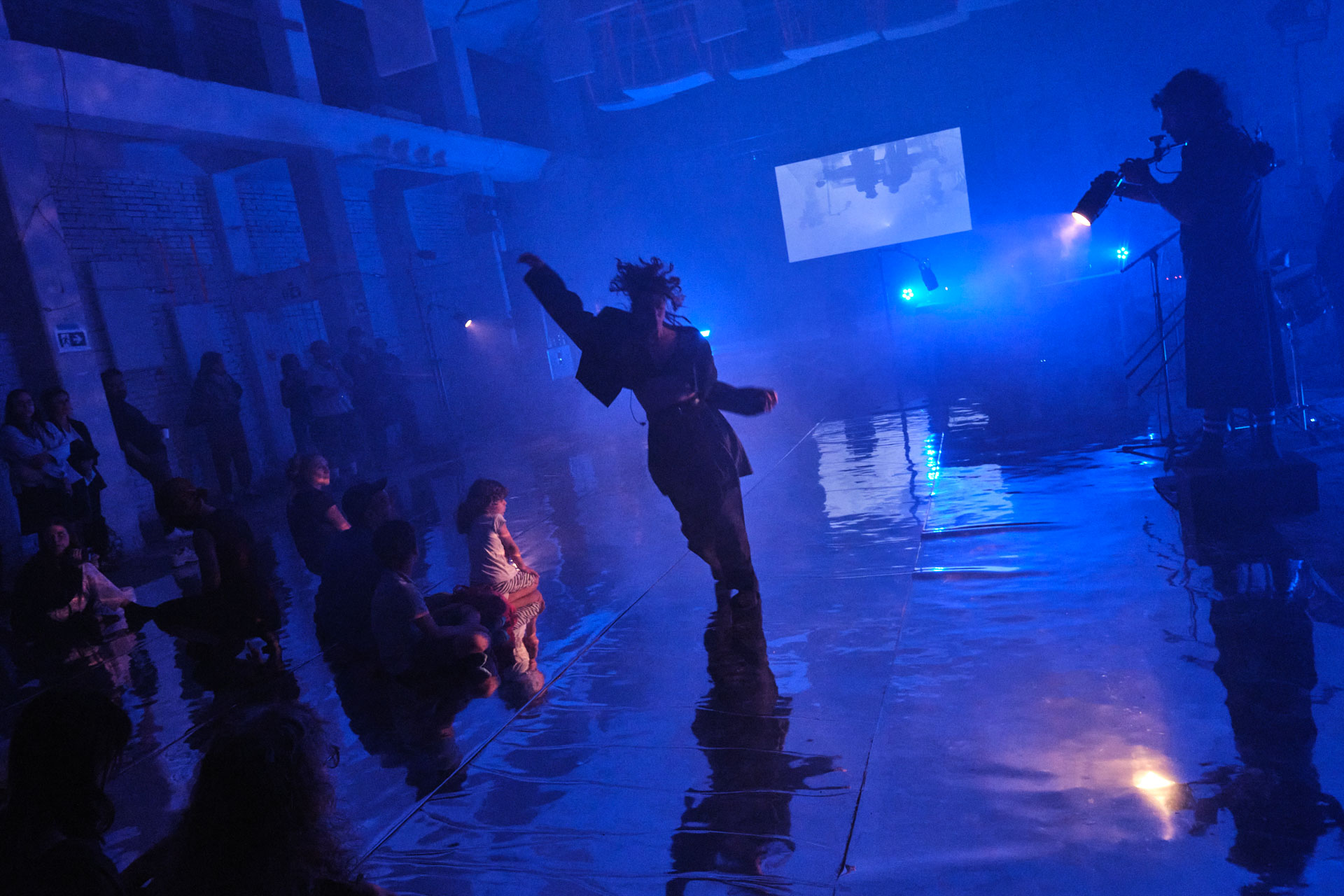
Specie di spazi - Spazio Z.A.R.A. Ravenna
Photo: Lorenzo Pasini


